 Skip to content

News

Alzheimer’s and Urinary Incontinence: Practical Support for Caregivers

Male urinary incontinence products

Living Well with Urinary Incontinence After Spinal Cord Injury

Support for Carers: Practical Ways to Reduce Stress and Prevent Burnout
Caring can involve repeated physical, emotional, and practical responsibilities, whether support is provided at home, in a care facility, or through a professional role. Daily care may include hygiene support, mobility assistance, meals, medicines reminders, appointments, and ongoing attention to changes in the person’s needs.

UTI and C. diff: How Urinary Catheters May Increase the Risk
Urinary catheters are commonly discussed in the context of the risk of urinary tract infection. However, in some care situations, the concern may extend beyond urinary symptoms alone, especially when catheter use, infection risk, and antibiotic exposure occur close together.

Continence Care in Care Homes: Best Practices for Residents and Staff
Urinary incontinence is common in UK care homes, especially among residents with reduced mobility, frailty, cognitive impairment, or a high level of dependence on daily support. In this setting, continence care is not only a hygiene routine but part of wider support for comfort, dignity, skin health, and quality of life.

Medications for Spinal Spasticity and Urinary Incontinence: What to Know
Spinal spasticity is a common symptom of neurological conditions such as spinal cord injury or multiple sclerosis. It affects not only mobility but also daily comfort, making basic activities and self-care more difficult. In many cases, medication becomes the primary method of managing these symptoms.
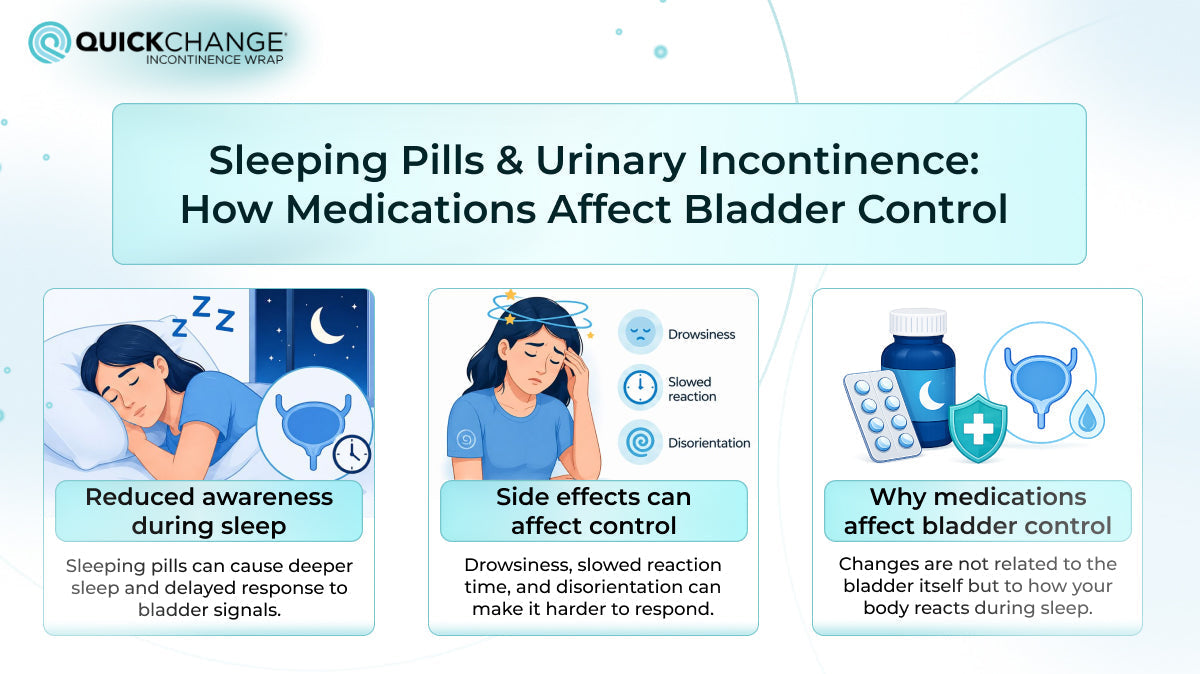
Sleeping Pills & Urinary Incontinence: How Medications Affect Bladder Control
Sleeping pills can affect bladder control, especially at night. By changing how the body responds during sleep, they may make it harder to wake in time or react to physical signals, even when bladder function itself remains normal. In this article, we look at how sleeping pills and related medications influence nighttime incontinence and why these changes tend to become more noticeable after starting or adjusting medication.

Alternatives to Condom Catheters for Long-Term Incontinence Care
For many men with urinary incontinence, the condom catheter (a type of external urinary catheter) is one of the most common non-invasive methods of urine collection. While this device can be practical in certain situations, it is not always the most comfortable solution for long-term use. Some users may experience skin irritation, leakage, difficulty finding the right size, or general discomfort during prolonged wear.

Urinary Tract Infection (UTI) Test Strips for Men: Accuracy, Interpretation, and Responsible Use
Urinary tract infections (UTIs) in men are less common than in women, but when they occur, they often require careful evaluation. Unlike uncomplicated bladder infections, UTIs in men are frequently associated with underlying conditions, which makes early assessment especially important.

Incontinence Needs in Hospice at Home: A Carer Guide
Caring for a patient during hospice at home often involves changes that require special attention from the family. Incontinence may become part of daily care and affect not only physical condition but also a person's sense of dignity and comfort. That is why incontinence care in hospice at home requires a structured and measured approach.

What is a Death Doula? UK End-of-Life Care and Influence on UI
Patients receiving end-of-life care due to terminal illnesses or conditions are faced with progressive physical decline, which gradually weakens or completely disables some of the body's functions. Urinary incontinence is no exception to this loss of function, which is a common and often underestimated problem among patients.
